Tying Feedback to Profit: How Allegion’s Training Team Proved Its Business Value with Explorance Metrics That Matter

About Allegion
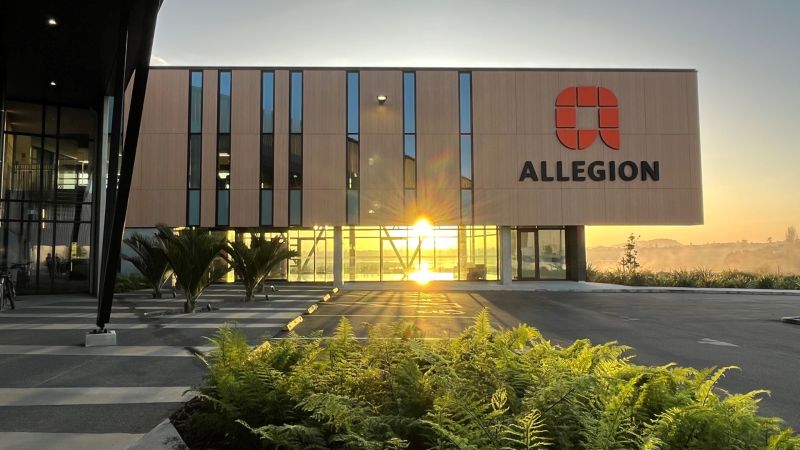
Allegion is a global leader in security products and solutions, dedicated to creating safe and secure environments for homes, businesses, and institutions worldwide. With a diverse portfolio of trusted brands like Schlage, Von Duprin, and LCN, Allegion delivers innovative mechanical and electronic access control systems designed to protect people and property. Committed to advancing smart security technology, Allegion combines industry expertise with cutting-edge solutions to meet the evolving needs of customers across the residential, commercial, and institutional sectors.
The Challenge: Demonstrating the True Business Value of Training
Allegion operates a vast training program across North America, delivering more than 300 in-person sessions annually to over 6,000 participants. The training team, led by Director of Training, Anthony Berticelli, consistently earned a high Net Promoter Score (NPS) of 84, which is a strong indicator of learner satisfaction. Yet internally, a critical challenge persisted: leadership wanted to see concrete evidence that training directly influenced sales, reduced customer issues, and strengthened brand loyalty.
The existing survey process, while functional, did not deliver insights in a way that aligned with executive decision-making. Many survey questions were too generic, missing the specificity needed to guide improvements or prove return on investment (ROI). Feedback lacked segmentation by learner type, which made it difficult to interpret in context. Above all, the team needed a way to clearly connect their training outcomes to business performance and present that connection convincingly. Without this link, there was a risk that the training program could be seen as a cost center rather than a critical driver of revenue and operational success.
The Solution: Building a Clear Path from Survey Data to Profit with Explorance Metrics That Matter
To meet this challenge, Berticelli reengineered Allegion’s feedback strategy using Metrics That Matter (MTM) for survey design, data collection, and reporting. The first step was audience segmentation. Through MTM, learners were categorized into three distinct groups: Prisoners (reluctant attendees), Vacationers (happy to participate but not deeply engaged), and Explorers (motivated learners seeking actionable knowledge). This classification allowed the team to interpret survey results within the proper context, recognizing that each group’s feedback served different purposes.
To maximize participation, surveys were streamlined to under five minutes and capped at 13 questions, with mandatory comment fields for low scores to capture actionable detail. Monthly review cycles within MTM ensured that trainers, designers, and leadership were all working from the same up-to-date, relevant data set.
The Outcome: A Clear Link Between Training and Profitability
The MTM-enabled strategy delivered results that resonated at every level of the organization. Allegion maintained a strong 60% survey response rate, well above industry averages for post-training feedback, while dramatically improving the quality and actionability of the data collected. The numbers told a compelling business story: over 63% of participants reported they were more likely to purchase Allegion products after training, directly tying the program to increased sales potential. Also 70% of participants indicated that the training reduced product-related issues in the field, which translates into fewer calls to technical support and higher customer satisfaction.
MTM’s ability to create role-based dashboards and tailored reports ensured that each stakeholder group received the insights most relevant to their needs. For leadership, MTM built concise KPI-focused dashboards with color-coded visuals to communicate key outcomes in a format executives could digest in minutes. Trainers received detailed qualitative comments rather than just numerical scores, enabling them to act immediately on specific improvement opportunities. Designers were provided with targeted insights into content flow, accuracy, and relevance, helping them fix errors quickly and plan more engaging instructional materials. The shift fostered a culture of continuous improvement, as internal benchmarks set within MTM encouraged year-over-year growth even when performance was already well above industry standards.
Related Case Studies



Learn more about Explorance's products, solutions, and the company.

'%3e%3cpath%20d='M5.83968%2010.4004L7.09855%2015.7752L1.29959%2021.5843L1.23852%2021.642C1.21137%2021.6692%201.18762%2021.6997%201.16047%2021.7235C0.481112%2022.4372%200.0747675%2023.3674%200.0127211%2024.3508C-0.0493254%2025.3343%200.236888%2026.3082%200.821155%2027.1016C0.885626%2027.1865%200.950095%2027.2713%201.01796%2027.3493C1.0306%2027.3649%201.0442%2027.3796%201.05868%2027.3935C1.16422%2027.5192%201.27755%2027.6382%201.398%2027.7497L1.4455%2027.7939L1.67624%2028.0246L9.14125%2035.4896L20.0334%2024.6043L5.83968%2010.4004Z'%20fill='white'/%3e%3cpath%20d='M13.1078%2039.4493L9.78247%2042.761L15.1539%2041.5055L20.98%2047.3113L21.0411%2047.369L21.1225%2047.4504C21.8375%2048.1288%2022.7681%2048.5345%2023.7517%2048.5965C24.7354%2048.6585%2025.7096%2048.373%2026.5041%2047.7897C26.5889%2047.7253%2026.6737%2047.6608%2026.7518%2047.5929L26.7959%2047.5522C26.9233%2047.4401%2027.0434%2047.3199%2027.1556%2047.1925C27.1709%2047.1795%2027.1845%2047.1647%2027.1963%2047.1484L27.4304%2046.9211L34.8954%2039.4561L23.9999%2028.5605L13.1078%2039.4493Z'%20fill='white'/%3e%3cpath%20d='M34.8921%209.76194L38.2072%206.45019L32.8358%207.70228L27.0199%201.89315L26.9588%201.83207C26.9317%201.80492%2026.9045%201.78117%2026.8808%201.75403C26.1658%201.07561%2025.2352%200.669967%2024.2515%200.607946C23.2679%200.545924%2022.2937%200.831473%2021.4992%201.41471L21.2515%201.61491L21.204%201.65902C21.0833%201.7643%2020.9699%201.87767%2020.8646%201.99833L20.8239%202.04245L20.5932%202.2664L13.1282%209.73141L23.9999%2020.6473L34.8921%209.76194Z'%20fill='white'/%3e%3cpath%20d='M47.1789%2022.1067C47.1181%2022.0204%2047.0524%2021.9377%2046.9821%2021.859L46.9414%2021.8149C46.8301%2021.6867%2046.7099%2021.5665%2046.5817%2021.4552L46.5376%2021.4145L46.3069%2021.1838L38.8419%2013.7188L27.9531%2024.6041L38.8419%2035.4928L42.157%2038.8046L40.9015%2033.4332L46.7073%2027.624L46.7683%2027.5663L46.8464%2027.4815C47.5267%2026.769%2047.9337%2025.8392%2047.9958%2024.856C48.0579%2023.8727%2047.771%2022.8992%2047.1857%2022.1067H47.1789Z'%20fill='%230050C1'/%3e%3c/g%3e%3cdefs%3e%3cclipPath%20id='clip0_6641_12689'%3e%3crect%20width='48'%20height='47.9966'%20fill='white'%20transform='translate(0%200.603516)'/%3e%3c/clipPath%3e%3c/defs%3e%3c/svg%3e)